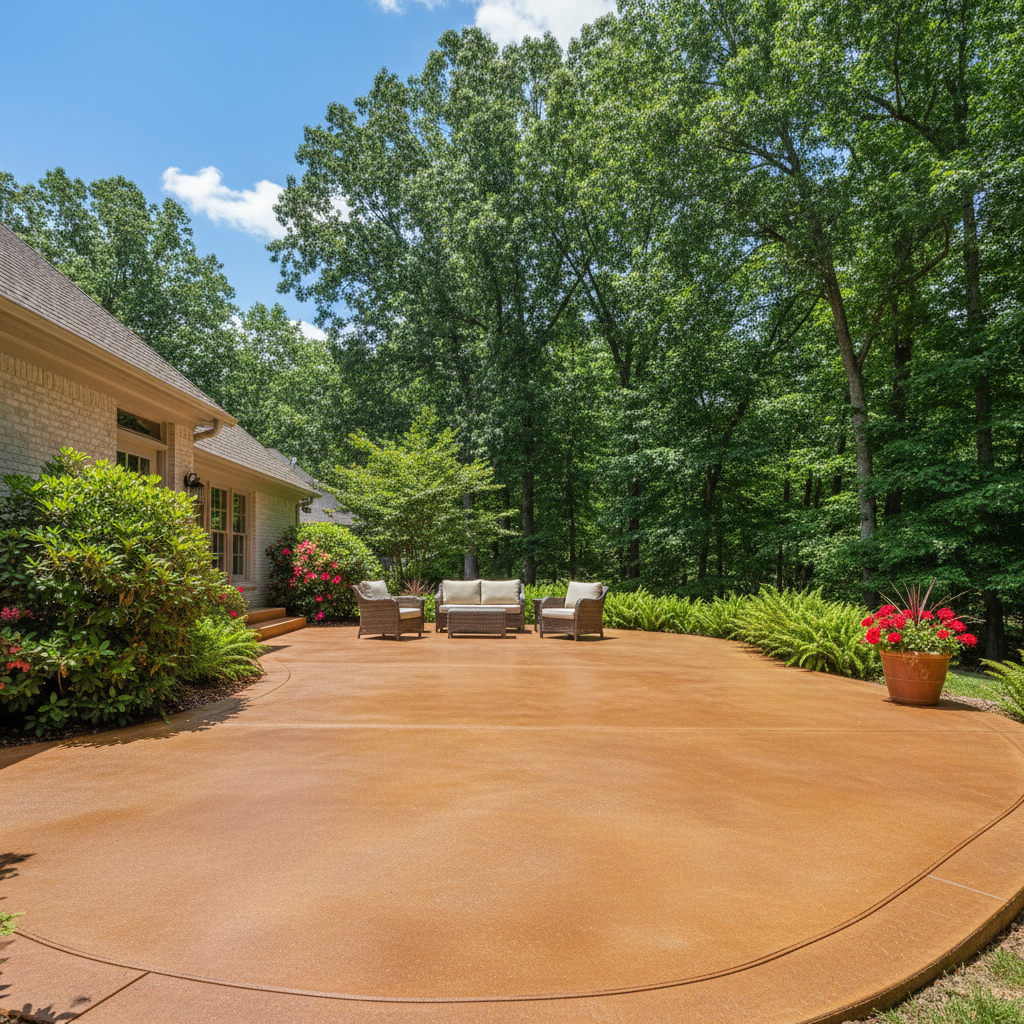
So, you've got stained concrete. Maybe it's a patio, a driveway, or even an interior floor. It looks fantastic, right? That rich color, the unique finish — it really adds a ton of curb appeal or character to your home. But here's the deal: even the toughest materials need a little love to stay looking their best, especially with our Alabama weather trying its hardest to beat everything down.
I've seen a lot of stained concrete projects over the years, both new and old. The ones that hold up and keep their vibrancy aren't just lucky; they're well-maintained. It's not rocket science, but there are definitely some things you need to know to extend the life of your investment.
Extend the Life of Your Stained Concrete
The biggest thing you can do to protect your stained concrete, especially outdoors, is to keep that sealer in good shape. Think of the sealer like the clear coat on your car; it's the sacrificial layer that takes the abuse from UV rays, rain, and foot traffic. Here in Hoover, with our intense summer sun and those sudden, torrential downpours, that sealer really gets a workout. I usually recommend checking your outdoor stained concrete sealer every 2-3 years. If it's starting to look dull, or if water doesn't bead up on the surface like it used to, it's probably time for a fresh coat. For high-traffic areas, like a busy walkway or a commercial space, you might need to reseal more often, no surprise there.
Indoors, it's a different story. Interior stained concrete usually has a much longer lifespan for its sealer, often 5-10 years or even more, depending on traffic and cleaning habits. The key is using the right type of sealer for your specific application. If you're not sure what kind of sealer was used or what to get, just ask. That's what Magic City Concrete is here for.
Regular Maintenance: Keep it Clean
This one's pretty straightforward, but people still mess it up. Regular cleaning is crucial. For outdoor stained concrete, a simple sweep to remove leaves and debris is a good start. Then, a gentle wash with a hose and a mild, pH-neutral cleaner is usually all you need. Stay away from harsh chemicals, abrasive brushes, or pressure washers set on too high a setting. Those things can strip the sealer, dull the finish, or even damage the concrete itself. I've seen folks try to blast off mildew from their patio in Bluff Park with a commercial-grade pressure washer, only to end up with a patchy, faded mess.
For indoor stained concrete, regular sweeping or vacuuming keeps grit from scratching the surface. Mop with a pH-neutral cleaner. Again, no harsh acids, ammonia, or bleach. If you spill something, clean it up quickly, especially if it's acidic like vinegar or citrus juice, or something oily. Those can etch or stain the sealer if left too long.
Warning Signs of Trouble
You're not a concrete expert, and you don't need to be. But you should know what to look for that might signal a problem. Here are a few things:
- Fading Color: If your vibrant stained concrete is starting to look pale or washed out, especially in areas exposed to a lot of sun, that's a clear sign your sealer is failing.
- Peeling or Flaking Sealer: This is pretty obvious. If the top layer is coming off, it means the sealer didn't bond correctly, or it's just completely worn out.
- Dull Spots or Streaks: This could be from chemical spills, improper cleaning, or just uneven wear on the sealer.
- Cracks: Hairline cracks are pretty common in concrete, and often just a cosmetic issue. But if you see cracks widening, or if they're accompanied by uneven surfaces (one side of the crack is higher than the other), that's a bigger structural concern.
- Moisture Issues: If you notice constant dampness or efflorescence (that white powdery stuff) on your stained concrete, it could indicate moisture coming up from underneath, which can cause the sealer to fail prematurely.
When to Call a Professional
Look, I'm a big believer in DIY when it makes sense. But some things are best left to the pros. You should definitely call Magic City Concrete or another reputable professional if:
- You're seeing widespread sealer failure: If it's peeling everywhere, or the color is fading significantly across a large area, you might need more than just a simple re-seal. It could require stripping the old sealer and reapplying, which is a job for someone with the right equipment and experience.
- You have significant cracking or settlement: As I mentioned, small cracks are often cosmetic. But if you've got structural cracks, uneven slabs, or signs of foundation movement, that's a serious issue that needs expert assessment.
- You want to change the look: If you're tired of the color or want to add another layer of staining, that's a specialized process.
- You're unsure: Honestly, if you're looking at your stained concrete and just don't know what to do, give us a call. It's better to get an expert opinion early than to try something that makes the problem worse. We're happy to take a look and give you an honest assessment.
Taking care of your stained concrete isn't a huge chore, but it does require some attention. A little effort now can save you a lot of headache and expense down the road, and keep that beautiful finish looking sharp for years to come.