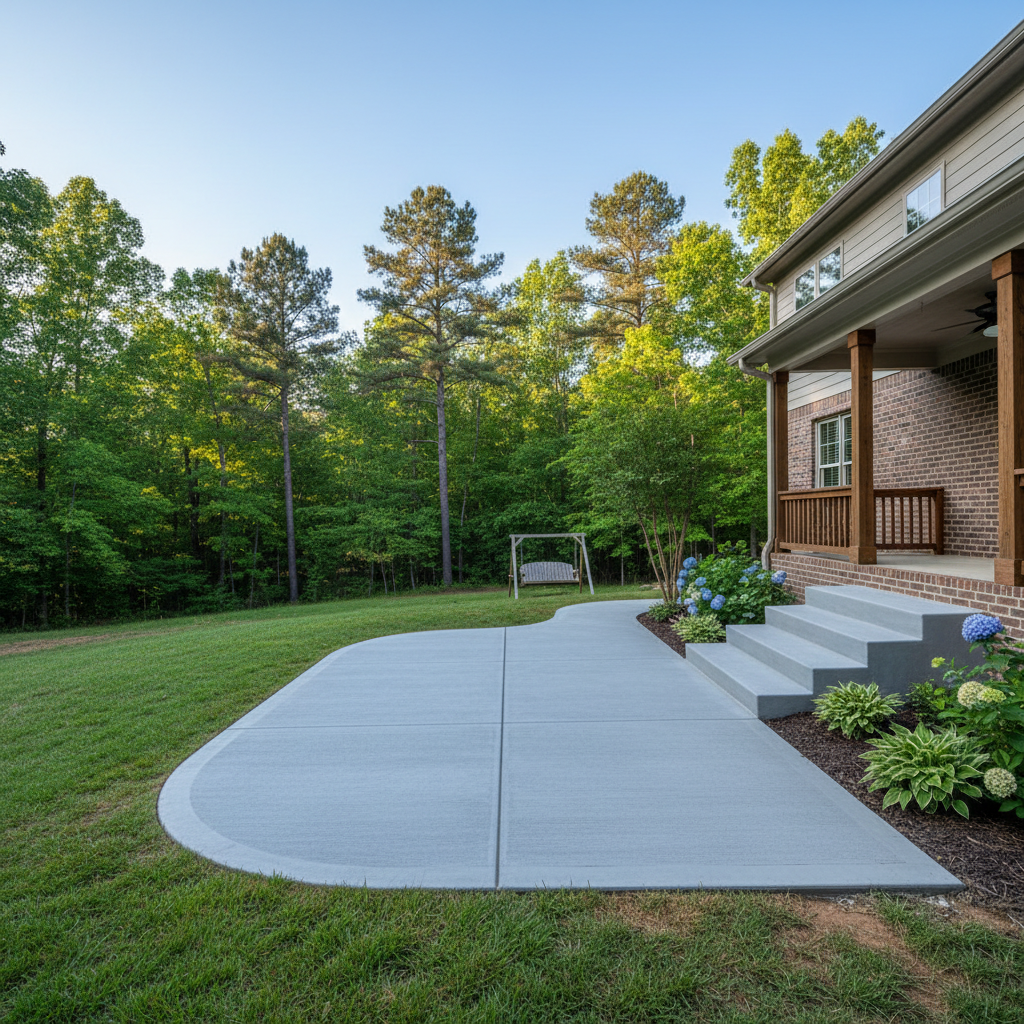
Pouring a slab outside in the middle of a Hoover July means watching the ice melt in minutes. That same intense Alabama heat wreaks havoc on wet concrete if you do not know what you are doing. Concrete does not technically dry; it cures through a chemical reaction that needs moisture and controlled temperatures. When the mercury climbs past ninety and the humidity thickens up over at Bluff Park or Ross Bridge, that slab wants to dry too fast. That is when shrinkage cracks start showing up before you even finish the final trowel pass.
Magic City Concrete spends time explaining why we cannot just pour a driveway on any random Tuesday in August. Summer afternoon thunderstorms roll in, dumping two inches of rain on fresh mud that was setting up fine ten minutes prior. If rain pits the surface of uncured concrete, you are looking at an ugly mess that is nearly impossible to fix without grinding or capping the whole thing. Magic City Concrete watches the radar like hawks during storm season, but spring and fall usually give us the most stable window for flatwork.
Springtime around here brings mild temperatures, but it also brings constant showers. If you are planning a patio or a new walkway, April can be a bit of a gamble with all the spring fronts pushing through. That is why late fall is one of the best times to schedule concrete work in Hoover. The air cools down, the humidity drops off, and concrete cures at a nice, even pace that builds maximum strength. You just have to watch out for the occasional early morning frost if November sneaks up on you with a sudden freeze.
Winter is not a total washout for construction, but freezing temperatures overnight mean we have to use blankets and specific admixtures to keep the internal temperature of the mix from dropping below freezing while it gains strength. Frozen water inside fresh concrete expands, and that ruins the structural integrity completely. If you have got existing concrete, winter brings freeze-thaw cycles that test every microscopic crack in your driveway. Water gets down into the pores, turns to ice, and pops the surface right off. That scaling is common on older driveways that were not sealed properly.
Protecting your concrete investment year-round comes down to two simple maintenance habits. First, keep your gutters clean so roof runoff is not pooling right next to your slab edges, washing out the red clay subgrade underneath. Hoover native clay expands when it is soaked and shrinks when it bakes dry, creating massive shifting and settling issues for rigid concrete above it. Second, get a good penetrating sealer rolled onto your driveway and patio every 2 to 3 years. It stops moisture and road salt from sinking in and doing damage. Taking 30 minutes on a Saturday to clean and seal your concrete saves you thousands of dollars down the road, keeping your property looking solid for 15 to 20 years or more.